
Patch repair cap and cove vinyl flooring in WC2A Central London
It’s not always the glamorous jobs we take on at Cavendish De Vere.
There are no sunlit penthouses, no sweeping reception areas, no dramatic before-and-after photos that stop you scrolling. Sometimes, the work that matters most happens quietly, out of hours, and far from view.
This was one of those jobs.
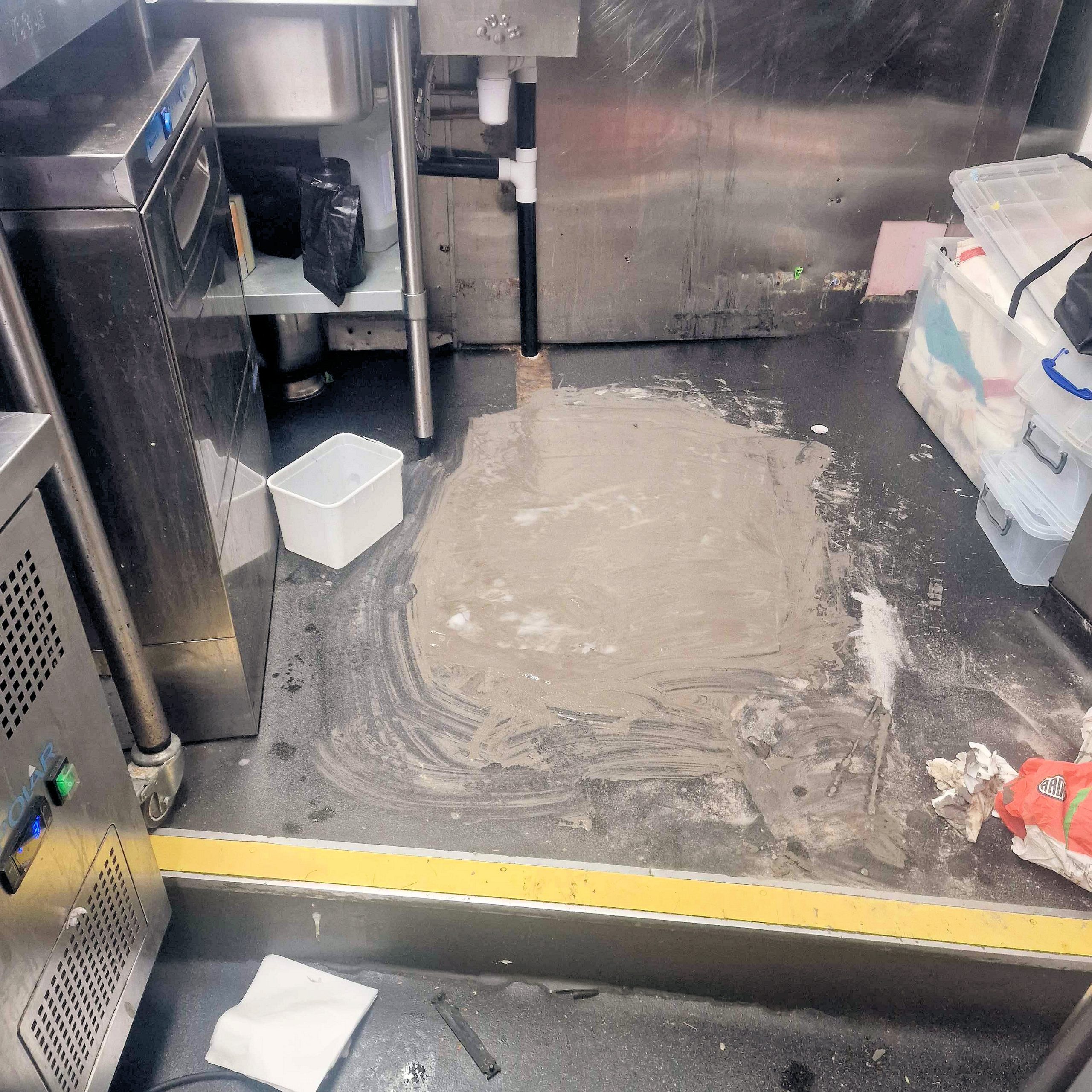
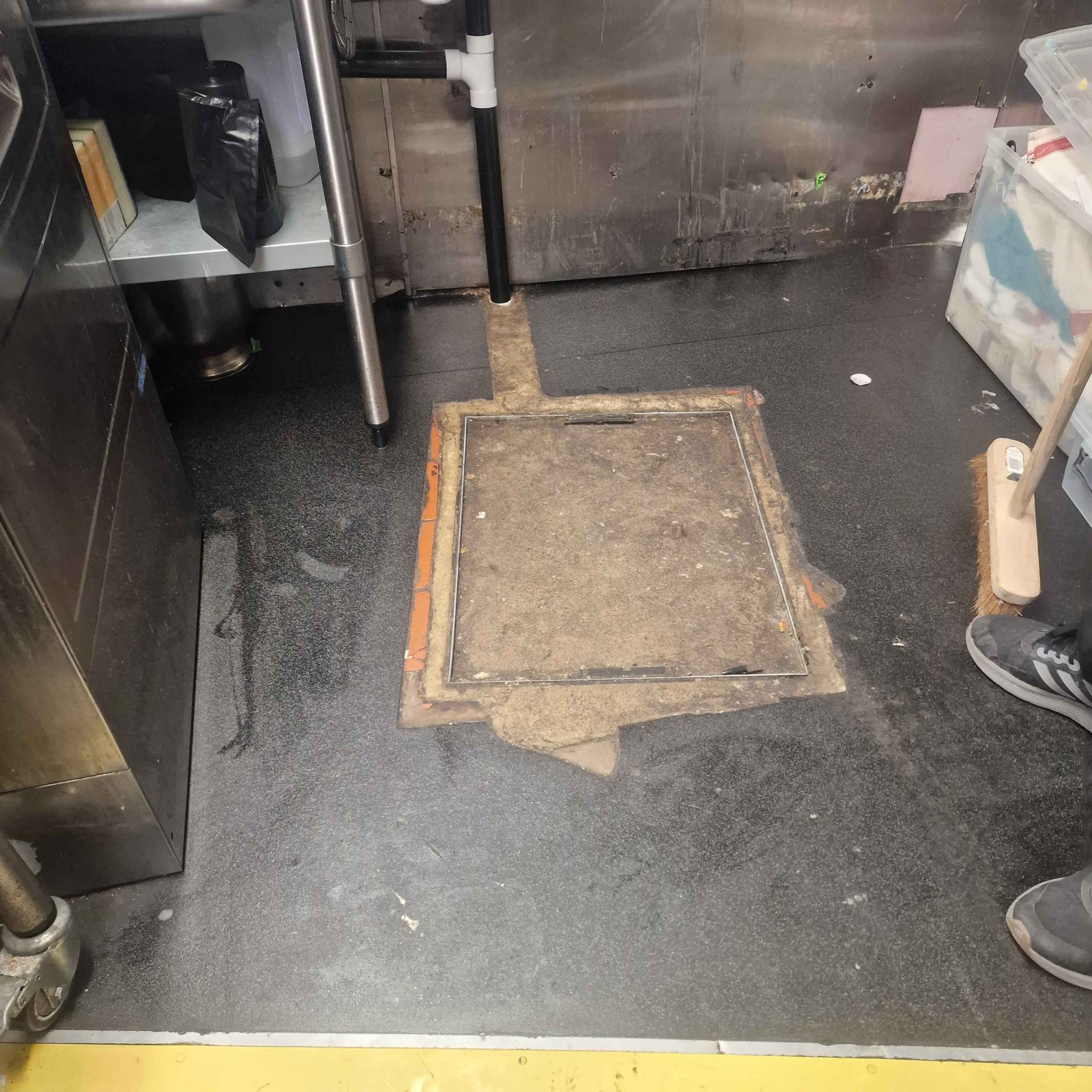
In the early hours of the morning, deep beneath street level in a basement kitchen in Holborn, WC2, we were tasked with repairing and replacing a small but critical section of vinyl safety flooring — including cap and cove detail — in a live commercial environment.
The Setting
Basement kitchens are a world of their own.
Dark. Dingy. A little bit smelly. Definitely greasy. But, importantly, generally clean — the kind of place where you might not want to linger, but where you’d still say, “Yes, we’d eat here.”
And that’s exactly the point.
This wasn’t a neglected space. It was a hard-working kitchen, operating long hours, producing food safely day in and day out. The floor hadn’t failed because of poor hygiene or lack of care — it had failed because vinyl safety floors in commercial kitchens take a beating.
Heat. Moisture. Chemicals. Constant foot traffic. Trolleys. Heavy equipment. It all adds up.
The damaged area was small, but it mattered.
Why a “Small Patch” Is Never Small
In environments like this, flooring isn’t decorative — it’s functional infrastructure.
A compromised section of safety vinyl or cap and cove detail isn’t just unsightly; it’s a hygiene risk, a slip risk, and a compliance issue. Water ingress behind vinyl, broken welds, or lifted edges can quickly become a problem far bigger than the original damage.
That’s why the client needed the repair done:
-
Out of hours
-
Quickly
-
Properly
-
With minimal disruption
No shortcuts. No cosmetic fixes.
The Work
The scope was straightforward on paper:
-
Cut out the damaged section of safety vinyl
-
Prepare and clean the substrate thoroughly
-
Install a new patch with correct adhesive and curing time
-
Reform cap and cove detail to maintain a hygienic, sealed finish
-
Hot weld and seal the repair
In reality, it required precision.
Working at night, in tight conditions, surrounded by fixed equipment, there’s no margin for error. Everything has to be done cleanly, calmly, and methodically — even when the environment is working against you.
And yes, it was greasy.
And yes, it was warm.
And no, it didn’t smell great.
But this is the job.
The Honest Truth About “After” Photos
Here’s something we don’t talk about enough in this industry: sometimes the best repair work doesn’t look impressive in photos.
After the repair, the floor didn’t look dramatically better.
It looked… normal.
And that’s the success.
The surface was safe again.
The welds were sealed.
The cove was reinstated.
The hygiene line was restored.
No one walking through that kitchen the next morning would stop and admire the floor — and that’s exactly how it should be.
Why We Take These Jobs On
It would be easy to say no to work like this.
It’s awkward.
It’s unsocial.
It’s not glamorous.
And it rarely makes for exciting marketing material.
But these are the jobs that define a flooring contractor.
The ones where:
-
Businesses rely on you to keep operating
-
Failure isn’t an option
-
The work has to be right first time
At Cavendish De Vere, we take pride in being the team that turns up when the lights are low, the kitchen is quiet, and the job still needs doing.
Because good flooring work isn’t always about how it looks.
Sometimes, it’s about making sure no one ever notices it again.
So, if you know where to come when need some safety flooring repair in London.




Recent Comments